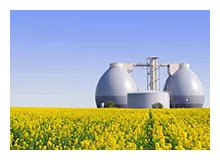
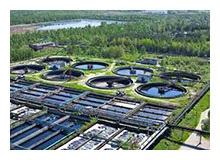
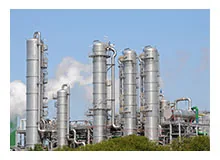
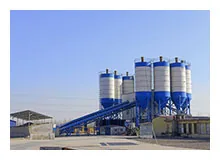
Applications range from food production, wastewater treatment and biogas plants to bioethanol production and the building materials industry. We offer probes for installation in pipes and vessels to suit different processes. Contact us to discuss your measurement task and installation conditions.
Measurement tasks by industry
Total solids measurement in sludge and biogas substrates
In wastewater treatment plants, online total solids measurement monitors primary and digested sludge. In biogas plants, agricultural and biogenic substrates can be assessed. MicroSinus provides measurements during operation and is calibrated for each medium using laboratory values.
Concentration measurement in the sugar and food industries
Microwave concentration measurement supports process monitoring of water-containing products in the sugar and food industries. MWM tec applications include sugar products, dairy products and pastes, as well as molasses and stillage in bioethanol production. Measurement and installation are adapted to the product and process conditions.
Measuring sand slurries in the building materials industry
Sand slurry measurement is one application in the building materials industry. Microwave transmission measures water-containing media directly in the process; the probe and calibration are selected for the measurement point.
Which measurement parameter is suitable for which application?
The industry alone does not define the measurement task. The medium, target variable and conditions at the measurement point are decisive. Defined concentrations or operational Brix values may be relevant in food production. Total solids are often the focus for primary and digested sludge, biogas substrates and bioethanol process media.
Agree on the terminology before selecting a device. Brix is not a general term for all solids. Define the target variable, unit and reference method so that percentage values from different methods are not treated as equivalent.
What should be taken into account with sludge and biogas substrates?
Sludge and substrates can differ in composition, settling behaviour and gas content. A representative measurement point and appropriate sampling are therefore particularly important. A continuous dry matter (DM) trend can highlight changes; however, the reference method and process conditions must be known for evaluation. Suitability for a specific application is assessed on the basis of these conditions.
For a technical enquiry, it is helpful to provide the type of sludge or a description of the substrate, typical dry matter (DM) values, temperature and a sketch of the installation layout. Please also include details on mixing and any potential air pockets. The glossary on suspension explains why local measured values and unrepresentative samples may differ.
How are applications systematically evaluated?
Define the desired process information and its unit.
Describe the composition and any relevant product changes.
Check the installation location, filling and sampling.
Compare the signal with a standardised laboratory reference.
Evaluate additional samples across the intended operating range.
The sectionsondry matter measurement and calibration describe this relationship in more detail. Using the information on MicroSinus specifications, you can then determine which functions are required for the project. The application areas mentioned are intended as a guide and do not constitute an unrestricted approval for every formulation or operating condition.