Excess sludge removal & thickening
Continuous online monitoring of solids concentration for precise control of sludge discharge. This prevents undesirable hydraulic overload of the subsequent stages.

APPLICATIONS · SEWAGE TREATMENT PLANTS
Increase efficiency, reduce polymer consumption and optimise sludge dewatering with MWM tec
The cost-effective operation of modern wastewater treatment plants depends largely on precise, data-driven process control. Constantly changing influent loads, challenging sludge qualities and cost-intensive dewatering processes require comprehensive and reliable monitoring of solids concentration.
With its MicroSinus measurement system, MWM tec GmbH offers a solution for the harsh conditions of sewage treatment plant operations: using the microwave transmission method, you can continuously determine the dry solids content (TS content) and the density of sewage sludge in real time, directly within the process. This online monitoring complements laboratory reference data and provides continuous data for the cost-effective management of your sludge treatment line.
Our system can be flexibly installed on pipework and tanks and optimises key stages of your sludge treatment:
Continuous online monitoring of solids concentration for precise control of sludge discharge. This prevents undesirable hydraulic overload of the subsequent stages.
Precise determination of the dry solids (TS) content in the feed to decanters, chamber filter presses or screw presses. The system enables the fully automatic, demand-based dosing of flocculants (polymers).
Continuous density measurement in the recirculation loop of the digestion tower. This ensures homogeneous mixing, prevents biological overfeeding and optimises agitator running times.
| Process challenge | MWM tec (MicroSinus) approach | Economic added value |
|---|---|---|
| High costs for polymers | Real-time TS measurement immediately prior to dewatering | Drastic reduction in polymer consumption through precise real-time dosing. |
| Wear caused by abrasive media | Wear-free in-line sensor technology with no moving parts | Minimised maintenance and downtime, even with sandy slurries. |
| Varying degrees of dewatering | Continuous volume measurement in the main stream | Maximised degree of dewatering, resulting in significantly lower landfill and transport costs (cake weight). |
| Measurement errors caused by deposits | Optically independent microwave transmission method | Reliable measurements regardless of turbidity, fat or sludge deposits on the pipe walls. |
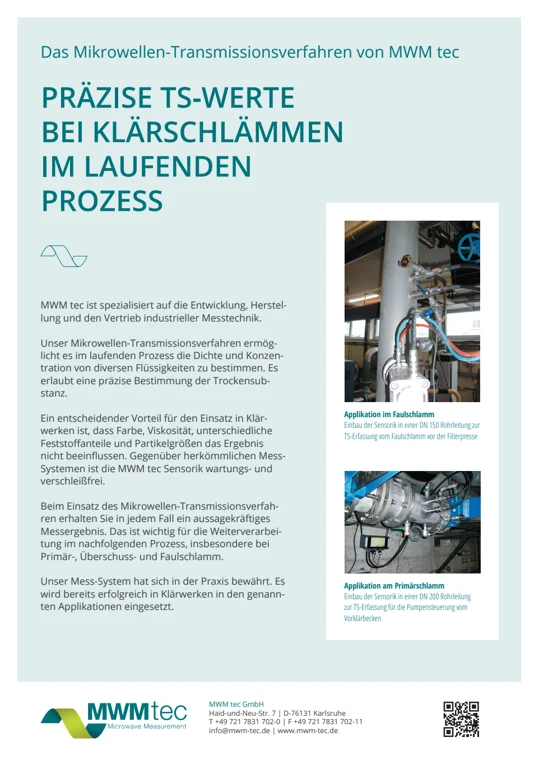
WASTEWATER TREATMENT LEAFLET
The German wastewater treatment leaflet shows the measurement principle and installation examples for primary and digested sludge.
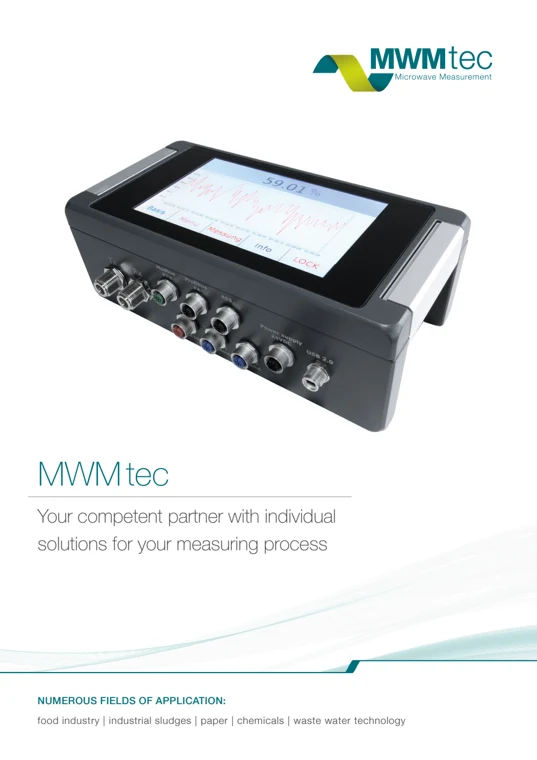
BROCHURE
Measurement principle, applications and technical specifications in one brochure.
Measuring points at the primary clarifier outlet and directly at the sludge withdrawal point.
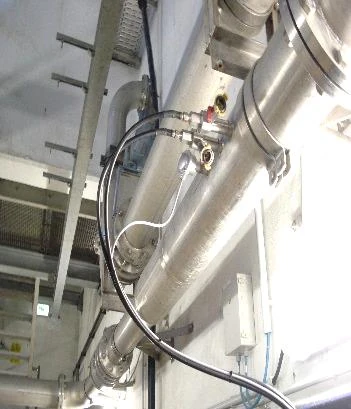
Primary sludge
Primary clarifier outlet, after the grinder.
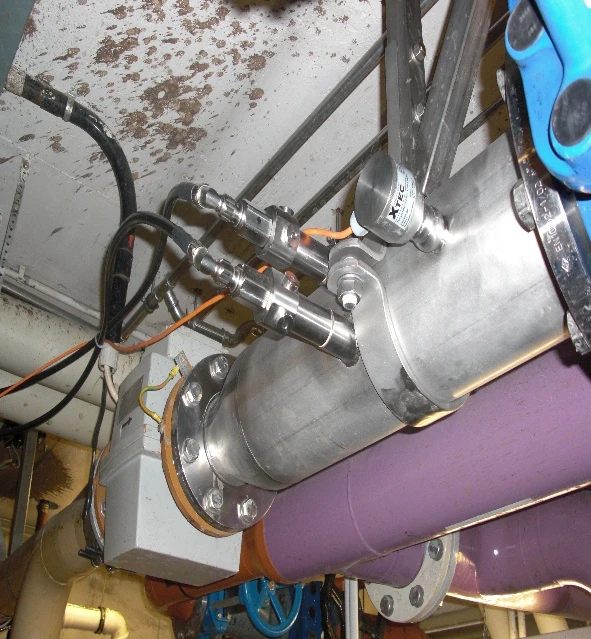
Primary sludge
Primary clarifier outlet, after the grinder.
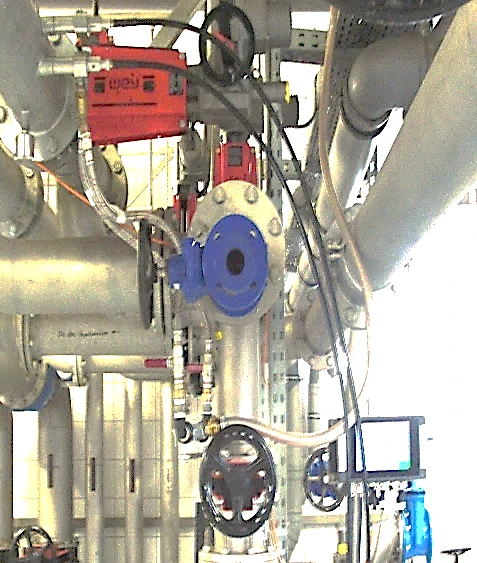
Primary sludge
Measuring point at the primary clarifier outlet.
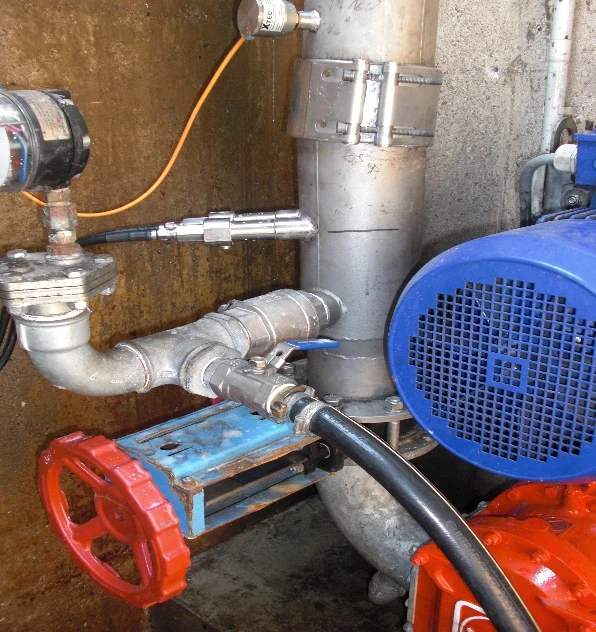
Primary sludge
Measuring point directly at the outlet of the primary clarifier.
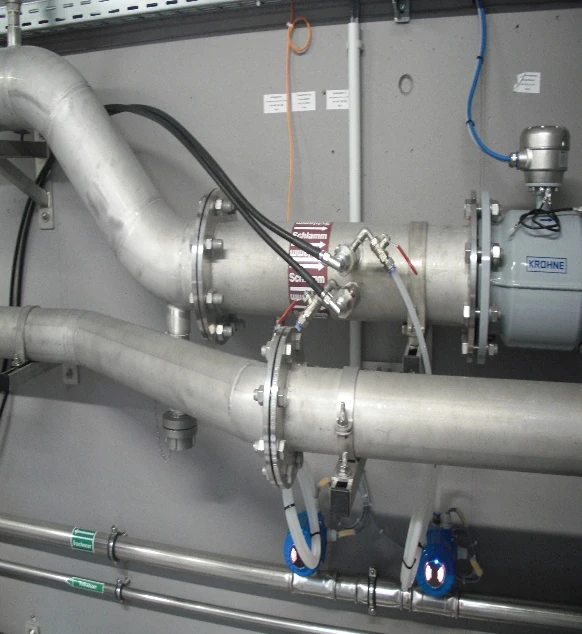
Primary sludge
Total solids measurement directly at the outlet – installation example 1.
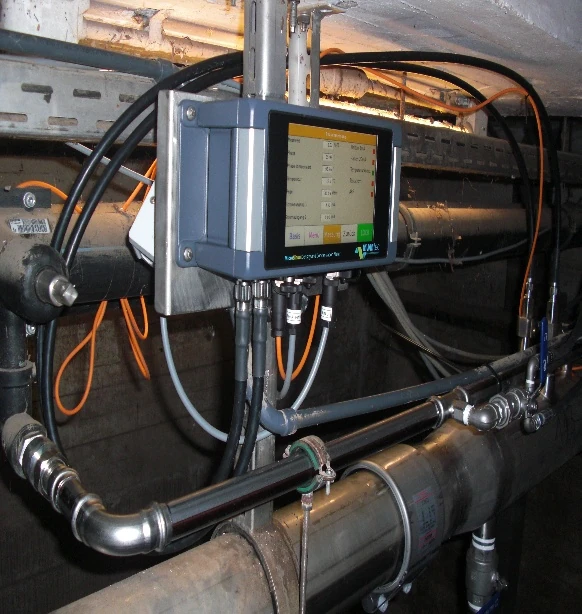
Primary sludge
Total solids measurement directly at the outlet – Installation example 2.
Total solids measurement after the pre-thickener and at the thickener outlet.
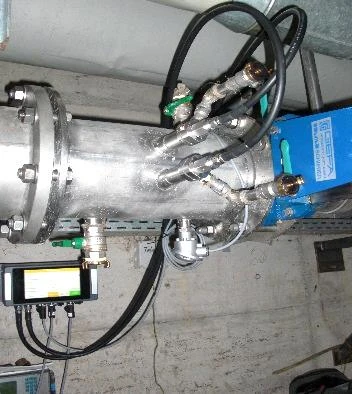
Primary sludge
Measuring point after the pre-thickener.
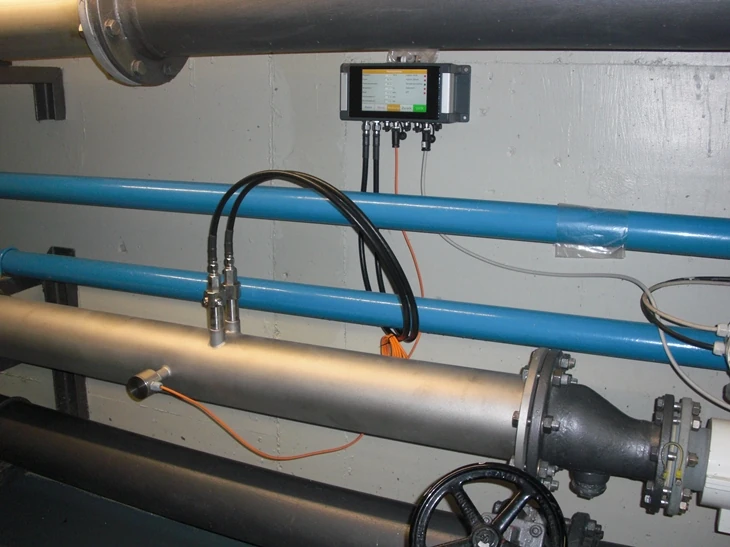
Primary sludge
Measuring point at the thickener outlet.
Excess sludge at the secondary clarifier withdrawal point and measuring points at the digester.
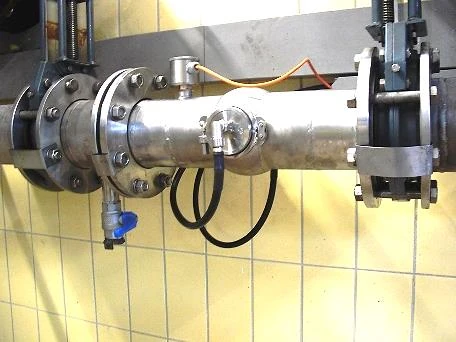
Excess sludge
Measuring point at the outlet of the secondary clarifier.
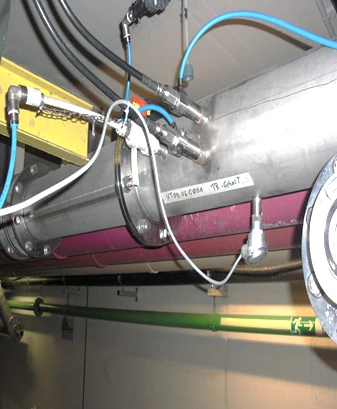
Primary sludge
Inlet to the digester.
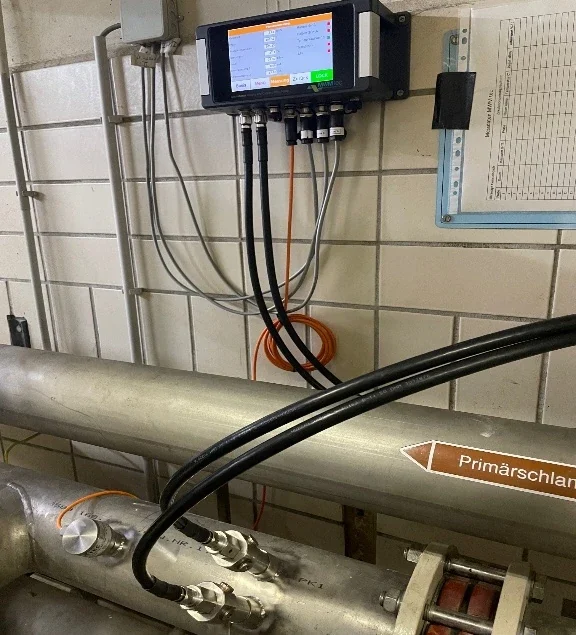
Sludge in the circulation pipe
Circulation pipe from the digester.
Measuring points for polymer dosing and polymer control upstream of the centrifuge.
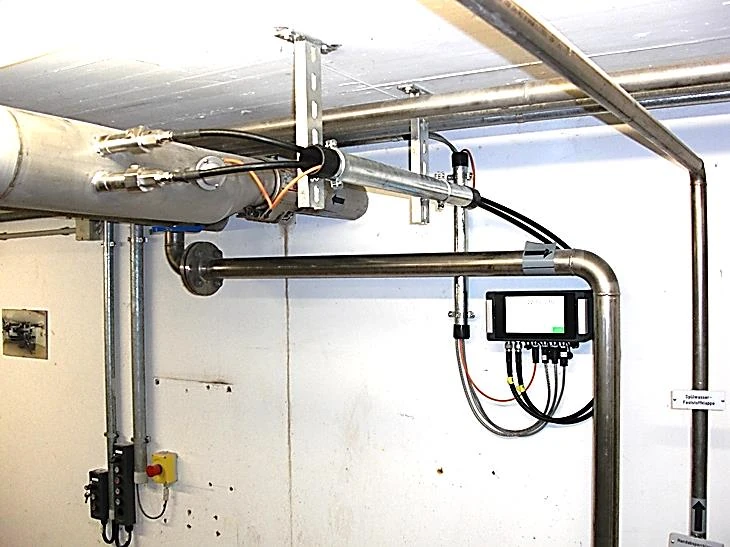
Digested sludge
Measuring point upstream of the polymer dosing unit.
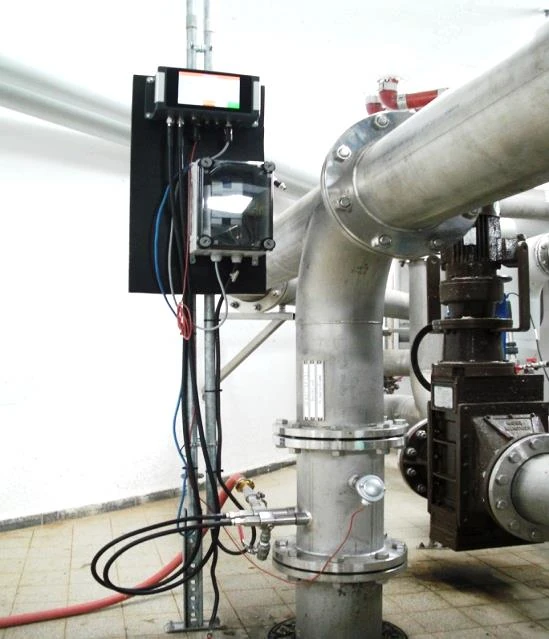
Digested sludge
Total solids measurement for polymer dosing.
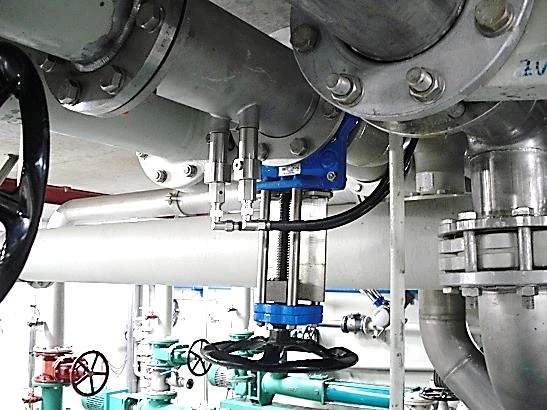
Digested sludge
Total solids measurement for polymer dosing.
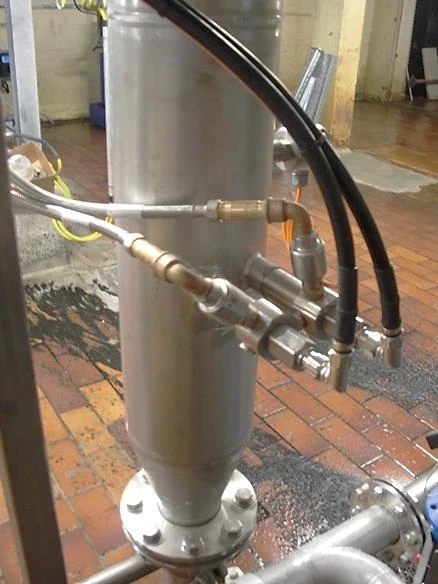
Primary sludge
Total solids measurement at the inlet of the centrifuge for polymer control.
The transmission principle detects the slurry within the measurement volume rather than just at its surface. The multi-frequency analysis provides the basis for continuous dry solids (TS) determination. The measured values can be integrated into the slurry control system via the specified industrial interfaces; the existing installation examples show pipework and measuring fittings with rod and planar probes.
YOUR TRANSLATION TASK
Take advantage of our many years of application expertise for your wastewater treatment plant. We would be happy to analyse your specific requirements and configure the optimal measurement system to ensure your success.